

California’s commercial cardrooms received a major legal victory on June 30, 2026, when San Francisco Superior Court Judge Richard Darwin struck down state regulations that would have severely restricted blackjack-style games and the rotation of the player-dealer position.
The ruling allows licensed cardrooms to continue offering their existing versions of blackjack and other controlled games for now. It does not erase the long-running dispute between commercial cardrooms, tribal casinos and state regulators, nor does it make every gambling venue or website connected to California equally legitimate.
For players searching cardroom gambling links, casino directories or blackjack information, the decision highlights a basic verification problem. A familiar game name does not explain who operates the venue, which rules apply, whether the link represents a licensed physical cardroom, or whether an unrelated website is using California gambling news to attract traffic.
That makes the court ruling more than a dispute over table-game mechanics. It is a reminder that gambling links should be evaluated according to ownership, licensing, location, game structure and regulatory oversight rather than promotional language alone.
What Judge Richard Darwin Decided
The case challenged regulations developed by the California Department of Justice’s Bureau of Gambling Control. Those regulations covered blackjack-style games and controlled games using a rotating player-dealer position.

The California Office of Administrative Law approved the regulations on February 6, 2026, and they became effective on April 1. Their implementation schedule would have required cardrooms to submit games for review, change noncompliant rules and eventually stop offering games that failed to satisfy the new standards.
The restrictions would have changed several characteristics that players commonly associate with blackjack. Cardroom games could no longer use 21 as the target number in the conventional way, treat going over 21 as a bust, or award an automatic win for an ace paired with a ten-value card. Game names would eventually have been prohibited from using “blackjack” or “21.”
The player-dealer regulations created a separate operational issue. California cardrooms do not traditionally bank games in the same manner as a Las Vegas casino. The player-dealer position must be made available to participants, and third-party proposition player services often assume that role under approved game procedures.
The challenged rules would have required the position to be offered before every hand and rotate to at least two other players within each 40-minute period. A third-party proposition player could not continue serving as the player-dealer consecutively.
Judge Darwin first issued a preliminary injunction on May 21. His June 30 ruling went further, finding that the Bureau of Gambling Control lacked the legal authority to impose categorical statewide game restrictions of this kind. The court distinguished the bureau’s enforcement and game-approval responsibilities from broader policy authority assigned elsewhere under California’s Gambling Control Act.
The California Attorney General’s Office said it was disappointed and was reviewing its options. Darwin acknowledged that the dispute could proceed to an appeal, meaning the ruling should be treated as a major current development rather than the permanent end of the litigation.
Why California Cardrooms Are Different From Tribal Casinos
The conflict is difficult to follow without separating commercial cardrooms from tribal casinos.
California cardrooms are state-licensed gambling establishments that may offer poker and approved controlled games. They cannot operate conventional house-banked casino games in which the establishment directly competes against players, collects losing wagers and pays winners from its own bankroll.
Tribal casinos operate under a different legal framework involving tribal sovereignty, federal law, the California Constitution and tribal-state gaming compacts. They may offer house-banked Class III casino games, including traditional blackjack, when permitted under their compacts.
Commercial cardrooms use player-dealer models intended to avoid having the establishment act as the house. In many games, a third-party proposition player service supplies individuals and funds to take the player-dealer position. Cardroom operators provide the tables, dealers and facility while collecting approved fees rather than banking each hand.
Tribal governments have argued for years that some cardroom games resemble house-banked blackjack too closely and infringe on the exclusivity California voters granted to tribal gaming. Cardroom representatives counter that their games have been reviewed and approved by state authorities for decades and remain legally distinct from tribal casino blackjack.
That distinction matters when a directory labels a link as “California blackjack” or “California casino gambling.” The same phrase could refer to a tribal casino, a licensed commercial cardroom, a free-play blackjack guide, a social casino, an online sweepstakes platform or an offshore gambling site.
Those categories should not be treated as interchangeable. Each has different operators, rules, financial structures, consumer protections and geographic restrictions.
How The Regulations Would Have Changed Cardroom Games
The proposed regulations were not limited to cosmetic changes. They would have altered both the identity of blackjack-style games and the operational model supporting player-dealer tables.
| Regulation Area | Proposed Effect | Why It Mattered |
|---|---|---|
| Target number | Traditional 21-based play would be restricted | Games would become less recognizable as blackjack |
| Bust rule | Going over the target would not work like a standard bust | Basic game outcomes and strategy would change |
| Natural blackjack | Ace plus a ten-value card would not automatically win | A defining feature of blackjack would disappear |
| Game names | “Blackjack” and “21” would be restricted | Players could have more difficulty identifying games |
| Dealer rotation | The player-dealer role would require frequent offers and rotations | Tables could face interruptions and operational changes |
| Third-party players | Consecutive banking by proposition players would be limited | The established cardroom business structure would be affected |
The rules had already generated economic concerns in cities that receive substantial tax revenue from cardrooms. Commerce, Bell Gardens, Hawaiian Gardens, Gardena and other municipalities rely to varying degrees on gambling-related revenue to support public services.
Cardroom representatives warned that the regulations could reduce table-game revenue, eliminate jobs and weaken municipal budgets. Tribal gaming interests viewed the rules as a long-overdue effort to enforce the boundary between player-banked card games and house-banked casino gambling.
Judge Darwin’s ruling resolved the immediate administrative-authority question in favor of the cardrooms. It did not settle every dispute about whether individual games comply with California law, nor did it eliminate the separate litigation made possible by the Tribal Nations Access to Justice Act.
Players should resist interpreting the decision as a declaration that every blackjack-related product associated with California has received judicial approval.
What The Ruling Means For Gambling Directories
A gambling directory should organize links according to what the destination actually provides. The court ruling makes that classification work more important.
A verified cardroom link should identify the licensed establishment, its physical location and the relevant California regulatory records. A tribal casino link should distinguish the property’s tribal ownership and compact-based casino framework. An educational blackjack guide should not be presented as a gambling operator, and a free-play resource should state clearly that no real-money wagering is involved.
Online links require another layer of review. California has not authorized statewide real-money online casino gambling. A website offering blackjack to California visitors may operate under an offshore license, use a sweepstakes model, provide social casino games or offer free practice play. Those structures carry different rules and should be described accurately.
The June ruling concerns California’s licensed physical cardrooms and the authority of a state bureau to impose particular regulations. It does not license unrelated online casinos, approve offshore websites or create a new statewide internet blackjack market.
This is where users can apply the same checks used to identify common online gambling scams. A legitimate-looking page can still misrepresent its licensing, copy another operator’s branding or use current legal news to imply an official connection that does not exist.
Useful gambling directories should verify more than whether a link opens. They should explain what kind of platform sits behind it.
Five Checks Players Should Make Before Following A Cardroom Link
The first check is the operator’s identity. A directory listing should name the company, tribe or licensed cardroom connected to the destination. Generic phrases such as “California blackjack site” provide little value when no accountable operator is identified.
The second check is regulatory status. For physical commercial cardrooms, users can review information from California gambling authorities. Tribal casinos operate through tribal governments and gaming compacts rather than the same cardroom licensing structure. Online sites require separate scrutiny because a California-themed page is not evidence of California authorization.
The third check is the type of gambling offered. A cardroom, sweepstakes casino, social casino, free blackjack trainer and offshore real-money casino are different products. A responsible directory should explain whether users are risking money, purchasing virtual currency or playing without financial stakes.
The fourth check is location language. Statements such as “available in California” can mean that a page loads from a California internet connection, not that the operator has been approved by the state. Users should look for precise eligibility terms, restricted jurisdictions and account-verification requirements.
The fifth check is consumer protection. Users should review withdrawal rules, complaint procedures, responsible gambling controls, data-security practices and the authority responsible for resolving disputes. The presence of blackjack tables or a polished website does not answer those questions.
The California Department of Justice maintains an official gambling regulation page containing the affected regulations, court status and associated rulemaking documents. That type of primary source is more useful than a directory entry that makes broad legal claims without identifying where the information came from.
Why The Cardroom-Tribal Conflict Is Likely To Continue
The June ruling addressed whether the Bureau of Gambling Control had authority to establish the challenged statewide restrictions. The underlying political and economic disagreement is much broader.
California tribal nations maintain that the state has promised them exclusivity over house-banked casino games. Commercial cardrooms maintain that their approved player-dealer games comply with state law and support thousands of jobs along with local tax revenue.
The dispute has moved through regulatory proceedings, ballot campaigns, legislation and multiple court cases. In 2024, Gov. Gavin Newsom signed the Tribal Nations Access to Justice Act, giving tribes a limited opportunity to bring a state-court action challenging certain cardroom games. That separate legal route means questions about individual game structures may continue even after the regulations themselves were struck down.
An appeal of Judge Darwin’s ruling is another possibility. The Attorney General’s Office was reviewing its options after the decision, and the judge said the significance of the issue made further litigation likely.
Directory publishers should account for that uncertainty. Pages claiming that blackjack has been permanently banned in California cardrooms are now outdated. Pages claiming that the litigation permanently validated every cardroom game may overstate what the court decided.
Accurate resources should attach dates to legal explanations, identify the specific ruling being discussed and revise listings when regulators or courts publish new decisions.
What Players Should Know Before Trusting California Gambling Links
California’s blackjack ruling keeps existing cardroom games available, but it does not remove the need for careful link verification.
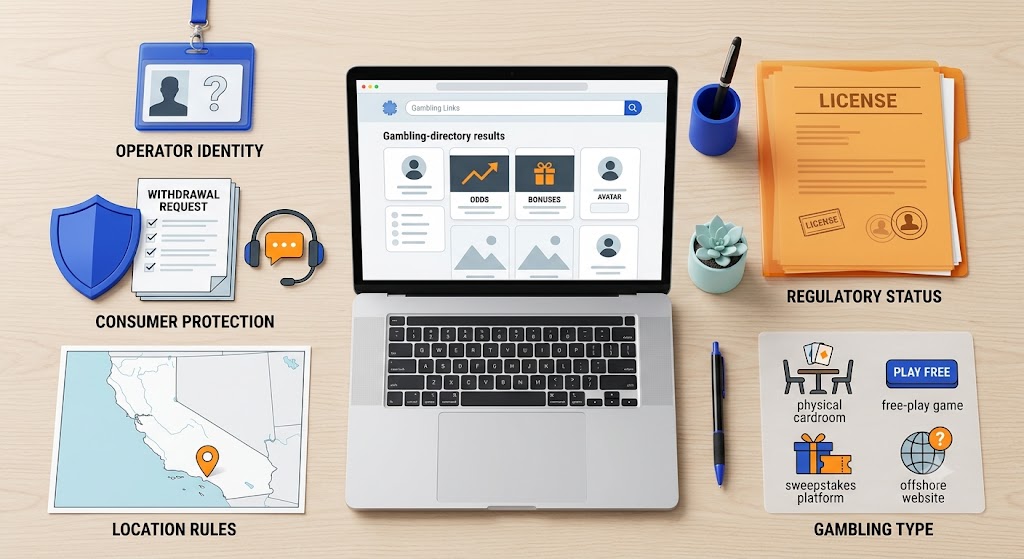
Players searching for sports betting forums learning blackjack venue should first determine whether the result leads to a licensed commercial cardroom, a tribal casino, an educational guide or an online platform operating under another legal model. The game name alone cannot establish legitimacy.
The most useful directories will make those distinctions visible. They will name operators, explain platform categories, link to regulatory information and avoid suggesting that a court decision involving physical cardrooms automatically applies to every online gambling service.
Judge Richard Darwin’s June 30 decision changed the immediate regulatory position of California cardrooms. It did not turn gambling discovery into a shortcut. Ownership, licensing, game structure, location rules and consumer protections still deserve separate review before a player relies on any cardroom or casino link.
Leave a Reply