
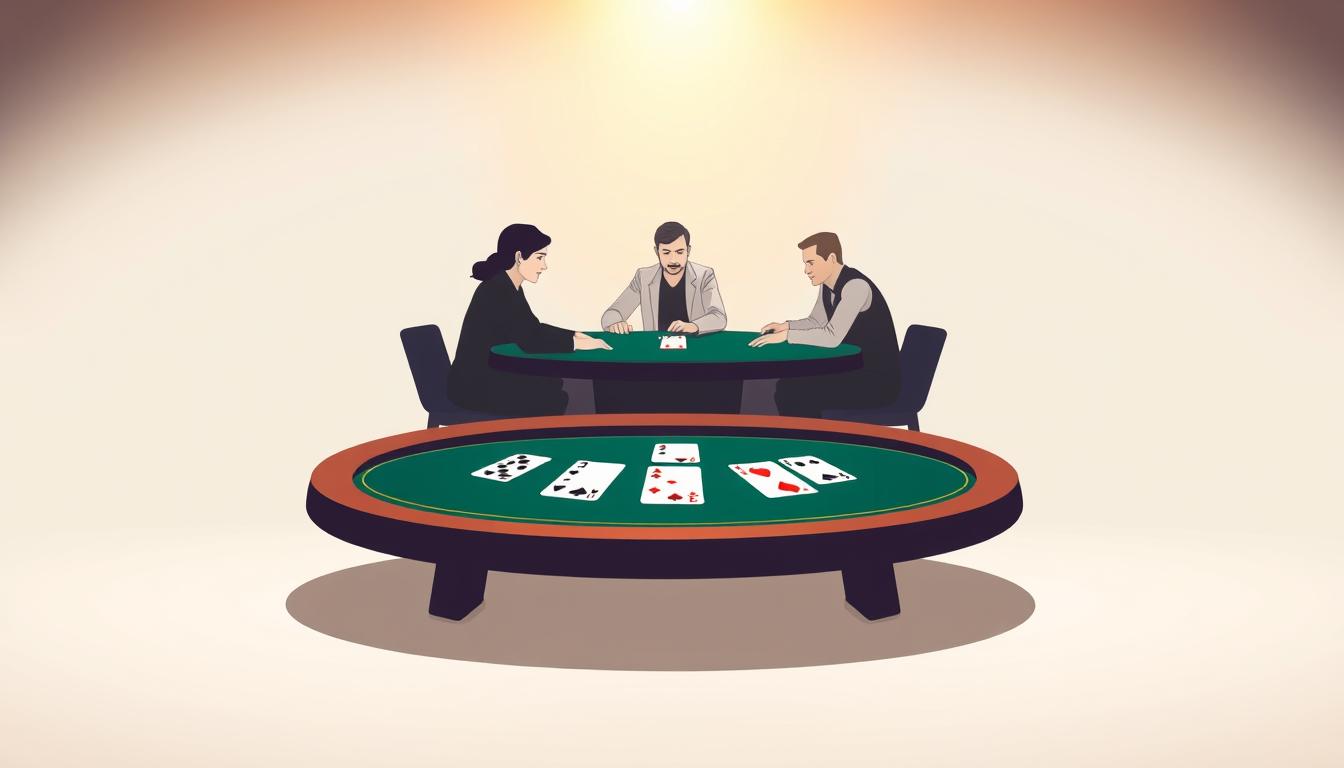
The dealer’s knuckles whiten as you split tens. Neon lights hum above green felt where fortunes pivot on a single card. This isn’t gambling—it’s the chess of casino games, where math nerds outwit probability itself. Why does this 17th-century French invention dominate Vegas? Simple: it’s the only table where you can actually outthink the house.
Born as “Vingt-et-Un” in Parisian parlors, today’s version challenges players to hit 21 without busting. But here’s the twist—you’re not battling luck. You’re dissecting dealer tells and calculating odds faster than Rain Man counts toothpicks. Mastery demands three elements: knowing when to stand, understanding basic strategy charts, and treating your chips like a Wall Street portfolio.
Think you can wing it? Tell that to MIT’s card-counting teams. The house edge isn’t a brick wall—it’s a negotiable margin when you’ve memorized split decisions and surrender rules. We’ll break down everything from dealer soft 17s to bankroll ratios that’ll make Warren Buffett nod approvingly. Ready to turn casino floors into your personal chessboard?
Introduction to Blackjack
What’s the only casino game where you can legally conspire against the house? Imagine James Bond coolly flipping cards in Monte Carlo. But instead of shaken martinis, he’s using math. That’s blackjack – the 21 card game where brains beat blind luck.
From French Salons to Digital Dominance
Born as Vingt-et-Un in 17th-century Parisian parlors, this game survived revolutions and Prohibition to become America’s casino darling. Fast forward to 2023: DraftKings reports 43% more blackjack hands dealt online than pre-pandemic. Why? Because unlike slots (the Monopoly of gambling), blackjack is Risk – a battle map where strategy matters.
The Intellectual’s Slot Machine
Three reasons smart players flock to table games casino staples like blackjack:
- The house edge starts at 0.5% (compared to 5-15% for slots)
- Decisions actually matter – every hit/stand alters your odds
- That sweet dopamine hit when you choose victory, not just luck into it
It’s chess with playing cards. You’re not beating “the machine” – you’re outmaneuvering a dealer bound by strict rules. Forget Bond villains; the real thrill is becoming Q Branch for your own bankroll.
Understanding the Basics
Learning blackjack is like learning a new language. Instead of verbs, you’re working with cards. The key phrase is “Hit me.” We’ll break down this casino language without needing a Rosetta Stone.
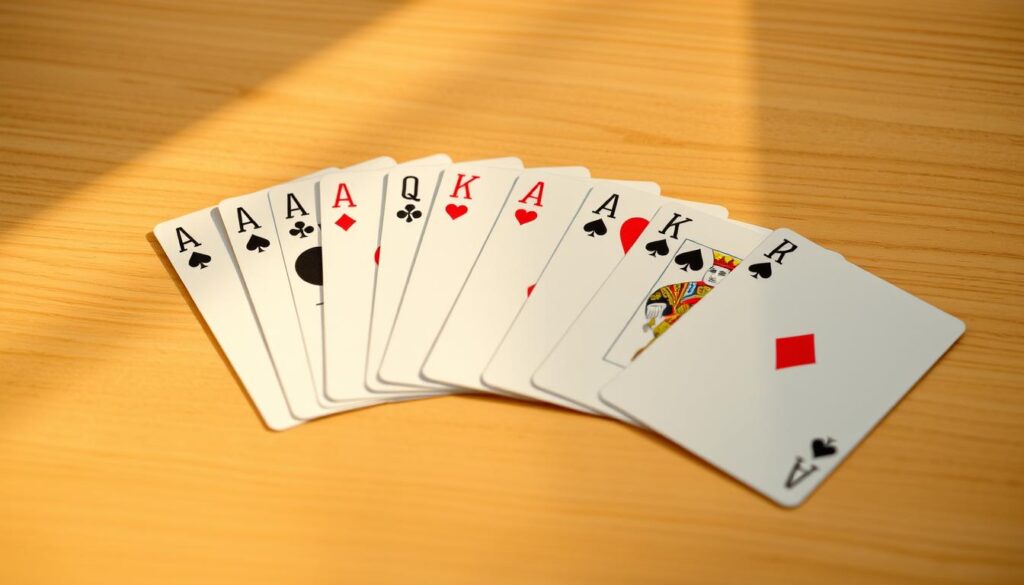
Your Mission: Beat the Dealer (Without Becoming a Meme)
The goal is to get to 21 without going over. Think of it like a game of chance. Every hand is like Schrödinger’s cat, existing in two states at once.
An ace in your hand can be 1 or 11. It’s like a quantum physics puzzle until you decide.
Card Values: The Casino’s Numerology System
Blackjack math is simple, except for aces. Here’s a quick guide:
| Card Type | Value | Pro Tip |
|---|---|---|
| 2-10 | Face value | No surprises here |
| Jack/Queen/King | 10 | Royalty tax |
| Ace | 1 or 11 | Your strategic wildcard |
An ace can make a big difference. It turns a hand into a soft hand or a hard hand. It’s like choosing between champagne and tap water.
Table Geography 101
The blackjack table is a seven-seat democracy. The dealer is the only dictator. Here’s what you need to know:
- Dealer’s Box: Where cards go to get flipped dramatically
- Betting Circles: Your money’s temporary parking spot
- Chip Rail: The dealer’s forbidden snack tray
Players take turns in a polite order. The first player on the left goes first. The last player on the right decides the group’s fate. The dealer follows strict rules: Hit on 16, stand on 17, no opinions allowed.
Basic Blackjack Rules
Blackjack is more than luck—it’s a game of strategy and quick decisions. It’s like the James Bond of casino games, elegant but full of hidden rules. Knowing these rules can make or break your game.
Initial Dealing and Player Actions
Every hand starts with two cards face up for you and one face down for the dealer. Your first choice is to hit or stand. Remember, check the dealer’s visible card first. If it’s a 4-6, they might be worried.
Hitting, Standing, Splitting, Doubling Down, and Insurance
Splitting pairs is like giving cards space to grow. Doubling down means doubling your bet for one more card. But insurance is a risky bet that doesn’t always pay off.
- Hitting: Tap fingers for another card
- Standing: Palm-down wave to hold
- Splitting: Flash a peace sign to separate pairs
- Doubling: Toss a matching chip beside your bet
Common Table Etiquette
Blackjack tables have many unwritten rules. Follow these Casino Commandments to avoid trouble:
- Thou shalt not touch thy cards (unless playing single-deck in Vegas)
- Thou shalt tip thy dealer when riding a hot streak
- Thou shalt not lecture others on their “terrible split”
- Thou shalt keep phone use rarer than a winning sic bo bet
Remember, the table isn’t your therapist. Keep the conversation light, the drinks in check, and your math sharp. Now go play and may luck be on your side.
Blackjack Basic Strategy
The blackjack basic strategy is like a GPS for casinos. It guides you to avoid losing money. Unlike throwing darts, it’s based on math.
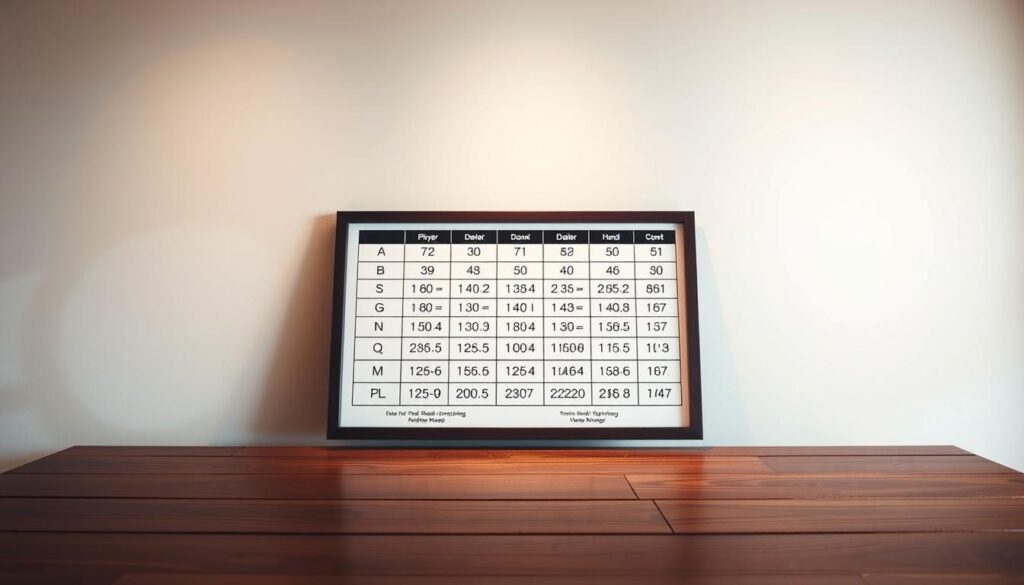
The Blackjack Strategy Chart
This chart is key to how to win blackjack. It’s a quick guide, not a long list of rules.
- Hard 16 vs. dealer 7: Hit like you’re trying to break a piñata
- Pair of 8s: Split faster than a TikTok trend
- Soft 18 (Ace-7): Double down like you’re negotiating a corporate merger
Pro tip: Laminate it. Casinos won’t kick you out for using it—they’ll just admire your commitment to reducing their profit margin.
House Edge Explained
The house edge is like a small tax on hope. Basic strategy reduces this to 0.5%. Think of it like this:
- Your $100 bet = 1 large pepperoni pie
- Casino’s cut = $1.50 (just the crust)
- YOLO players’ losses = $8+ (basically buying the whole pizzeria)
Why let them nibble your crust when you can keep the whole pie?
When to Use Strategy vs. Gut Instinct
Basic strategy is like Warren Buffett’s approach. Gut plays are like buying GameStop at $480. See the difference:
| Situation | Strategy Move | Meme Trader Move |
|---|---|---|
| 15 vs. dealer 10 | Hit (statistical safety) | Stand (pray dealer busts) |
| Ace-6 vs. dealer 2 | Double down | Hit timidly |
| Pair of 4s | Never split | Split “for funsies” |
Remember: The casino’s edge grows 3x when you play hunches. Your gut’s great for choosing brunch spots—keep it out of your bankroll decisions.
Bankroll Management for Beginners
Bankroll management is like a financial smoothie for gamblers. Everyone knows it’s good, but few stick to it. It’s hard to keep up with it, just like sticking to a New Year’s resolution.
Think of it as protecting your gaming world from big losses. It’s not just about credits; it’s about keeping your whole gaming universe safe.
Setting a Budget (and Actually Following It)
Think of your bankroll as a Netflix subscription. Spending it all in one go means watching reruns until you can pay again. Smart players use the 5% rule – never risk more than 5% of your total bankroll per session.
Here’s why beginners fail:
| Strategy | Why It Works | Rookie Mistake |
|---|---|---|
| Session Limits | Prevents “just one more hand” syndrome | Chasing losses with ATM withdrawals |
| Win Caps | Locks in profits before variance strikes | Doubling bets during hot streaks |
| Loss Thresholds | Preserves capital for future games | Borrowing from next week’s entertainment fund |
The Responsible Gambler’s Playbook
Responsible gambling isn’t about willpower – it’s about system design. Treat your bankroll like a stock portfolio. Diversify bets, hedge against variance, and never bet everything on one thing.
Pro tips:
- Use casino tools like loss limits and reality checks
- Separate gambling funds from life money
- Track sessions like a Wall Street quant
This approach works whether you’re learning craps or perfecting a roulette strategy. Discipline beats luck in the long run.
Mistakes That Turn Heroes to Zeroes
Even Drax knows: “Why would I want to win a small amount when I could win a large amount?” is the battle cry of doomed warriors. Top budget-killers:
- Emotional doubling: Treating losses like personal insults to your honor
- Side bet addiction: Chasing dragon bonus payouts
- Table hopping: Spreading bets thinner than Asgardian butter
Remember: casinos have more endurance than Thanos. You win by outlasting, not overpowering.
Advanced Tips
Let’s talk about the casino’s candy aisle. You know the one – flashy, colorful, and designed to make you forget why you walked in. Advanced blackjack play isn’t about sugar rushes. It’s about avoiding traps, understanding illusions, and choosing battlegrounds wisely. Here’s how to navigate three critical forks in the road.
Side Bets: The $5 Slot Machine on Your Blackjack Table
Those neon-lit “Perfect Pair” and “21+3” boxes? They’re the casino equivalent of a vending machine Snickers. Tempting, but here’s the math:
- Typical side bet house edge: 5-11% (vs. 0.5% in optimal blackjack play)
- Payouts structured like lottery tickets – rare wins, frequent losses
- Psychological trick: Uses blackjack’s social vibe to mask terrible odds
Want to really gamble? Try explaining compound interest to a roulette dealer. Stick to advanced blackjack strategy – it’s less thrilling but actually pays your rent.
Card Counting: Hollywood’s Favorite Myth
The 21 movie made it look like MIT students versus mustache-twirling villains. Reality? It’s grocery shopping. You’re tracking how many $20 steaks (high cards) remain in the meat aisle (shoe). Basic version:
| Card Value | Count Adjustment | Why It Matters |
|---|---|---|
| 2-6 | +1 | More low cards = worse player odds |
| 7-9 | 0 | Neutral impact |
| 10-Ace | -1 | More high cards = better player advantage |
Casinos hate this? Sure. Illegal? Only if you’re using external devices. Worth learning? For most players, mastering basic strategy first – like understanding roulette rules before betting on green – yields better returns.
Digital Tables vs. Human Dealers: A Star Wars Analogy
Playing online blackjack is like facing battle droids – predictable, relentless, slightly soulless. Live tables? That’s lightsaber duels with actual Jedi. Key differences:
| Factor | Online (Droids) | In-Person (Jedi) |
|---|---|---|
| Speed | 300+ hands/hour | 60-100 hands/hour |
| Tells | RNG algorithms | Dealer habits, player reactions |
| Atmosphere | Your couch, your rules | Chip sounds, cocktail servers |
New players often do better online – fewer distractions, slower pace to think. But if you’re the type who reads poker for beginners guides while watching WSOP highlights, live tables feed that competitive soul.
Online Blackjack: Key Differences
Online blackjack is like choosing between two paths. Welcome to the desert of the real… chips. You face two worlds: the sureness of algorithms and the surprise of humans. Let’s explore what makes online blackjack different from the casino.
Algorithmic Croupiers vs. Live Actors
Games like DraftKings’ RNG blackjack run on strict code. These digital dealers deal cards faster than a magician. You play against probability itself – no emotions, just numbers.
Live dealer blackjack is like a magic trick. Behind the scenes, a real person deals cards via HD stream. You get:
- Real card physics (watch that 5 of hearts flip!)
- Delayed reactions for strategic breathing room
- The existential crisis of tipping a webcam operator
| Feature | RNG Blackjack | Live Dealer |
|---|---|---|
| Speed | Lightning-fast | Human-paced |
| Social Aspect | Lone wolf mode | Chat-enabled |
| Trust Factor | Provably fair tech | See cards shuffle |
Free Games: Your Zero-Risk Flight Simulator
Online platforms let you test strategies without losing money. It’s like rehearsing Shakespeare in an empty theater. DraftKings’ free tables are great for:
- Testing basic strategy charts against infinite digital decks
- Practicing bankroll discipline with pretend money
- Obsessing over hypothetical “what if” scenarios at 2 AM
Pro tip: Use these sessions as combat drills, not ego-stroking playgrounds. The dealer doesn’t care about your imaginary winning streak.
Conclusion: Growing your blackjack mastery
Mastering blackjack is like leveling up in a game. Each smart move opens up new possibilities. Your basic strategy chart is like a secret code. Bankroll management systems keep you safe from the casino’s edge.
From Apprentice to Artisan
Free online simulators are like digital training grounds. They help you make perfect moves. Study the house edge like a stock analyst.
See casino games as experiments. Track your wins and losses carefully. It’s like being a scientist in a lab.
Tools of the Trade
Save strategy generators for quick number checks. Watch dealer shuffles like a spy. The key is to know the game better than anyone.
Knowing when to quit is the best strategy. Sun Tzu would say it’s about mastering the game and managing your money well. That’s how you win big at casinos.
Leave a Reply