

The internet is seen as a global village, a place without borders. Yet, your favorite show or online casino might be blocked when you travel. This is due to geo-restrictions, a digital border control.
Geo-blocking is not a glitch. It’s a system. It uses your IP address to check where you are. If you’re not in the right place, you can’t access certain content.
So, why do we have digital borders? It’s because of licensing agreements, laws, and business strategies. For example, a movie might only be available in North America. An online casino’s license might only be valid in one country.
Your IP address is like a digital passport. It shows your location to websites. If your IP says you’re in Paris but the content is only for Canada, you’re blocked. This is what geo-blocking is all about: a virtual border guard.
When you see “content not available in your region,” it’s not just a block. It’s the digital geo-block at work. The internet, it turns out, does have borders.
When Is VPN Use Allowed?
That VPN icon in your system tray might seem like a magic key. But using it to access blocked gambling sites can lead to trouble. It’s not just about getting around location blocks; it’s about breaking the rules you agreed to.
It’s like a game of cat and mouse. VPN users try to hide their location, while gambling sites use advanced tech to catch them. The sites have the upper hand, with systems that can spot VPN use and block accounts.
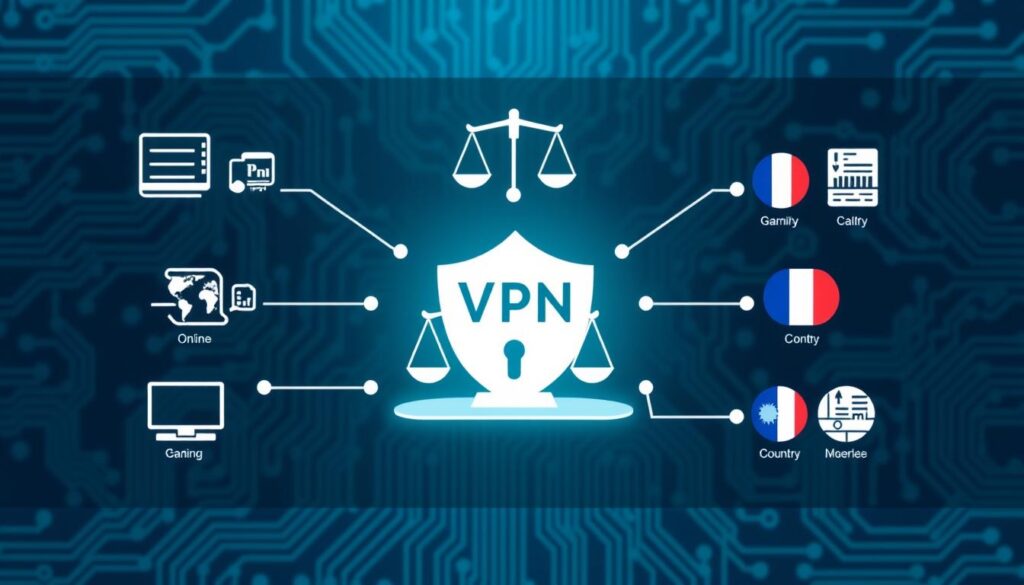
Getting caught can mean big trouble. It’s not just a warning. Platforms can freeze your account and take your money. You could lose everything you’ve bet.
Is using a VPN for this illegal? It’s not about breaking laws, but it’s against the platform’s rules. They can close your account and take your money, leaving you with no way to fight back.
The table below shows the ongoing battle:
| Platform Detection Method | Common VPN/User Evasion Tactic | User Risk Level |
|---|---|---|
| IP Address Blacklists | Using residential VPNs or rotating IPs | High (Easily flagged by large, known VPN IP ranges) |
| Browser & Device Fingerprinting | Using privacy-focused browsers or anti-fingerprinting tools | Medium (Advanced detection can find patterns) |
| Payment & Transaction Analysis | Using local payment methods or pre-paid cards | Very High (Payment origin vs. IP location is a major red flag) |
| Behavioral Analysis (Login times, bet patterns) | Attempting to mimic “local” user behavior | High (AI systems are trained to spot these anomalies) |
This is a legal gray area. Using a VPN to access gambling sites is risky. You might not face criminal charges, but you’re breaking the platform’s rules. This gives them the right to take your money.
Using a VPN for gambling is a gamble. The VPN itself is legal, but how you use it matters. You’re not just betting on games; you’re risking your account against the platform’s tech.
Legal and Safety Considerations
Using a VPN to bypass a geo-block is a clever trick. But, it’s a move that raises big legal and ethical questions. The main legal issues often come from breaking the site’s rules and local laws. It’s like digital camouflage; it helps you hide, but if caught, you face the consequences alone.
Gambling sites and streaming services work hard to block VPN traffic. If they catch you, they can freeze your account and any winnings. Even worse, using a VPN for illegal activities in your area can lead to serious legal trouble. It’s not just about the site’s rules; it’s about the laws where you are.
Your VPN’s privacy policy is your safety net. As shown in a study on VPN regulation, laws differ greatly by country. Some VPNs keep logs that can be handed over in court. You’re not just sharing your data; you’re also risking your legal safety. Using a VPN for this purpose is a risky gamble, where the odds are always against you.
Leave a Reply