

In today’s digital world, weak passwords are a big problem. “Password123” is a common choice, showing how vulnerable we are. Multi-Factor Authentication (MFA) is like a digital bouncer. It checks your ID, face, and name before letting you in.
For those who use online services, MFA is key. It adds a second layer of security. This makes your online accounts as secure as a bank vault, not just a simple lock.
Our digital lives are more valuable than ever. MFA offers many benefits beyond just security. It protects your digital identity and assets, like in online gaming or financial platforms.
Don’t see MFA as a hassle. It’s your digital insurance policy. It’s not just an extra step; it’s a strong defense against hackers.
Step-by-Step Setup
Setting up MFA is like learning to tie a bowline knot. It’s confusing at first but becomes easy once you get it. Moving from single-password security to MFA is a big step. It’s about creating a digital shield around your online world.
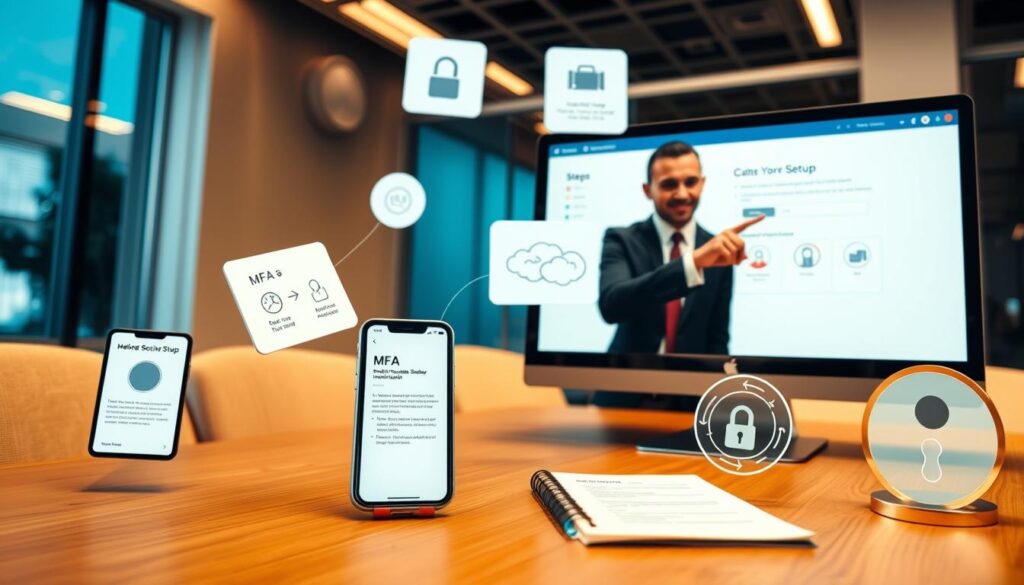
Locating and Activating 2FA in Your Account
Finding the authentication settings is the first step. It’s hidden, like a secret level in a game. Look for “MFA” or “2FA” in your account settings. It might be under “Security” or “Two-Step Verification.”
Navigating the Security Labyrinth
Start by checking your account settings. It’s like a digital “Where’s Waldo?” but with higher stakes. For Microsoft 365, there’s a detailed guide on setting up multi-factor authentication. Find the security or privacy tab in your settings to enable 2FA.
Choosing Your Authentication Method
Choosing your second factor is key. It’s like deciding between a screen door and a bank vault. It’s the “something you have” part of the security equation.
SMS, Authenticator Apps, and the Hardware Key Debate
Not all second factors are equal. It’s like comparing a paper lock to a biometric scanner.
| Method | How It Works | Security Level | Convenience | Best For |
|---|---|---|---|---|
| SMS/Text Message | A code is sent to your phone via text. | Low to Medium | High | Casual users, basic accounts |
| Authenticator App | An app (Google Authenticator, Authy) generates time-based codes. | High | High | Most users, excellent balance |
| Hardware Key | A physical key (YubiKey, Titan) you plug in or tap. | Maximum | Medium (requires carrying a key) | High-security accounts, business use |
SMS is old but convenient. But it’s not secure. Authenticator apps are better, working offline and safe from SIM-swapping. For top security, a hardware key is the best. It’s like a retinal scan and a secret handshake. It’s the ultimate in authentication security.
Recommended Apps/Devices
In today’s digital world, passwords aren’t enough. You need a physical key, a time-based code, and to be cautious. Finding the right tools for multi-factor authentication (MFA) is key. It’s not about finding one solution, but about choosing the right tools for you.
Whether you’re simple or complex in your digital habits, the right app or key can make a big difference. It can turn a secure account into a safe one, or a headline-making hack.
The App and Hardware A-List
Let’s talk about gadgets. The security world is divided into software and hardware. Software can be lost with a bad update, while hardware is more secure.
For a good start, check out the Wirecutter guide on two-factor authentication apps. But, your choice should depend on your personal risk level.
Authenticator Apps: The Digital Keyring
For most, an authenticator app is the best mix of security and ease. It’s like a digital keyring for your online life. Apps like Google Authenticator or Authy give you time-based passwords that change every 30 seconds.
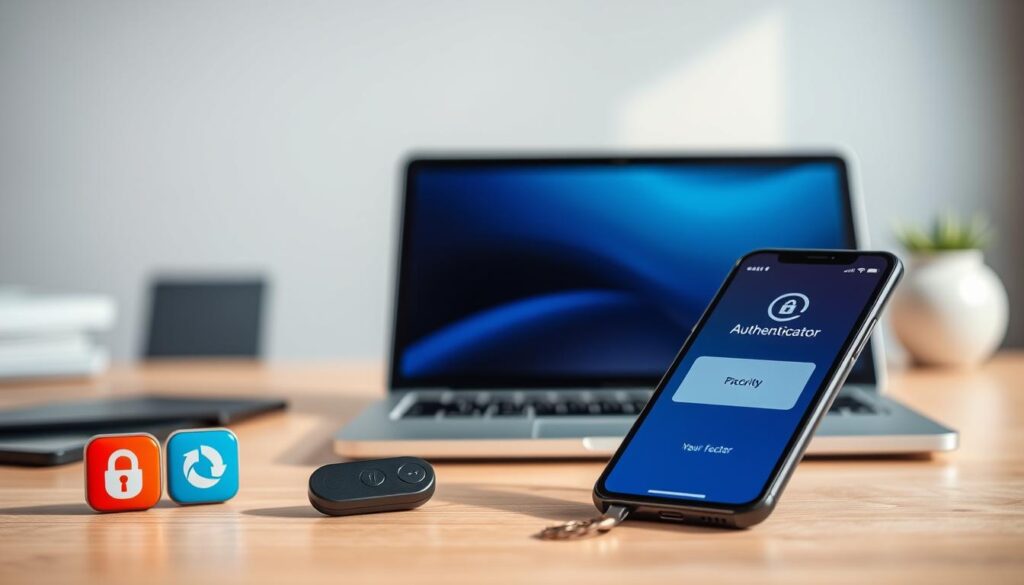
Google Authenticator is simple and reliable. But, losing your phone means losing access to your accounts. Authy offers cloud backup, making it more secure.
These apps keep secret keys on your device, making them safer than SMS codes. For more details, check out this Wirecutter review.
But, apps can be lost, stolen, or run out of battery. For the ultimate security, you need hardware.
Hardware keys are like vault doors. They make your account hard to breach and prevent phishing attacks. Here’s a quick look at the top hardware keys:
| Device | Key Features | Best For | Unique Perk |
|---|---|---|---|
| YubiKey 5C NFC | USB-C, NFC, FIDO2/WebAuthn | The tech-savvy power user | Multi-protocol support; works with phones and computers |
| Google Titan | FIDO Security Key | Google ecosystem users | Reliable, Google-branded, straightforward security |
| Nitrokey | Open-source, self-hosted | Privacy advocates & open-source purists | Complete control and transparency |
The YubiKey 5C NFC is versatile, working over USB-C, NFC, and supporting FIDO2/WebAuthn. It’s durable and reliable. The Google Titan key is simple and works well in the Google ecosystem. For those who love tinkering, the Nitrokey offers open-source security.
The YubiKey Bio adds a fingerprint sensor for extra security. It’s like having James Bond-level security for your email. This level of MFA is for anyone who wants extra security, not just corporations.
The security of these devices relies on trust and verification, just like in high-stakes environments. This is important, like in online platforms where security is key.
The best authenticator app or hardware key is the one you’ll use all the time. The goal is to make security a habit, not a chore.
Troubleshooting
Even the strongest MFA systems can have problems. If you’re having trouble logging in, this guide will help you get back in.
The “I’m Locked Out” Playbook
Your phone is lost, and your YubiKey is useless. The authenticator app is gone after a factory reset. This is a critical moment.
Before you worry, remember: 2FA has backup plans. The first step is to stay calm. Look for your backup codes. If you have them, you can unlock your account.
If you don’t have them, you’ll learn a hard lesson about digital safety.
Recovery Codes, Backup Keys, and the Customer Service Odyssey
Your recovery codes and backup keys are your digital lifelines. Losing them leads to a journey through customer service. It’s like proving who you are to yourself.
Many problems are simple to fix. For example, your account might be flagged, or your app might be out of sync. Not getting SMS codes is common too.
Check your junk folder for codes, as they might be filtered. For a list of common issues, like blocked accounts or phone problems, see the Microsoft support page on common 2FA problems. If all else fails, you’ll have to go through customer service.
You’ll need to answer security questions or remember account details. Remember, your backup codes are your digital key. Keep them safe.
Leave a Reply