
Imagine James Bond at a baccarat table. The sound of chips and cards, the secret math beneath the surface. Today, betting is not just in casinos but also on your phone. After the 2018 Supreme Court ruling, 38 states now allow some gambling.
It’s not just luck anymore. It’s about understanding the odds like Wall Street. There are three main types: American, Decimal, and Fractional. Each tells a story about what you might win and the chances of winning.
The 2008 poker boom was big, but today’s betting scene is even bigger. Whether you’re into March Madness or political betting, knowing the odds is key. It’s not about beating the house. It’s about understanding the house’s game.
Ignoring the math is the biggest risk. As betting becomes more common, odds are key to understanding risk. Let’s learn to read them without needing a tuxedo.
Why Odds Matter in Gambling
Odds are like the casino’s secret language. If you don’t speak it, your money might disappear quickly. They’re like beautiful poems that show how fast your cash can go.
- The house edge: The casino’s profit margin (their “service fee”)
- Your edge: What’s left after taking away their cut from 100%
For example, roulette has a 5.26% house edge. This means for every $100 bet, $5.26 is lost. Sportsbooks have a vigorish too:
| Game Type | House Edge | Your Survival Time |
|---|---|---|
| American Roulette | 5.26% | 19 spins |
| Sportsbook Vig | 4.76% | 21 bets |
| Slot Machines | 10-15% | 7 pulls |
These numbers show why pros study odds like Wall Street analysts. Ignoring math can lead to big losses, like the 2008 crash.
Here’s a simple trick: Implied Probability = (1 / Decimal Odds) × 100. For example, 2.0 odds mean a 50% chance of winning. Vegas always knows more than you do.
Follow these three rules for managing your bankroll:
- Bet sizes = (Edge / Odds) × Total Bankroll
- Never chase losses disguised as “value bets”
- Treat vig like a toxic ex – the less contact, the better
Remember, odds are not just suggestions. They’re mathematical survival guides written in casino hieroglyphics. Learn them, or you might end up funding someone else’s dream car.
Types of Odds: A Cross-Generational Translation Guide
Odds formats are like generational dialects. Boomers like fractions, while Gen Z prefers decimals. We’ll explore these through Wall Street, Euro, and British perspectives.
American Odds: The +/- Showdown
American odds are all about risk and reward. A Chiefs -760 line against the Steelers +585 is like shouting probability. It’s not financial advice.
When -760 Doesn’t Mean Debt
Negative odds show implied probability, not your debt. Betting $760 on a -760 favorite wins you $100. It’s like saying this outcome is as sure as Taylor Swift dating a football player. On the other hand, +585 underdogs offer 5.85x returns for those betting against the grain.
Decimal Odds: Europe’s Straight-Talk
Europeans just multiply, unlike Americans with +/-. Decimal odds are clear, like 2.0 means double your money. The 2020 Biden/Trump odds showed political probability in action.
Why 2.0 > “Evens” in Millennial Speak
Decimal odds are popular among Gen Z for their clarity. “Evens” sounds old-fashioned, while 2.0 is modern. It’s like switching from a handwritten ledger to a crypto exchange.
Fractional Odds: Tea-Time Math
Fractional odds are as British as arguing about the weather. 5/1 isn’t just math; it’s tradition. At Royal Ascot, “33/1 longshot” sounds fitting with a Pimm’s Cup.
From Royal Ascot to Super Bowl Squares
Fractional odds also won over American office pools. That 10/1 parlay is like Downton Abbey meeting Succession. It’s old-world elegance for fantasy football fans.
Step-by-Step: How to Read and Calculate Odds
Odds are like a secret code for sports fans. They separate the casual watchers from the serious bettors. It’s like knowing the menu before you order.
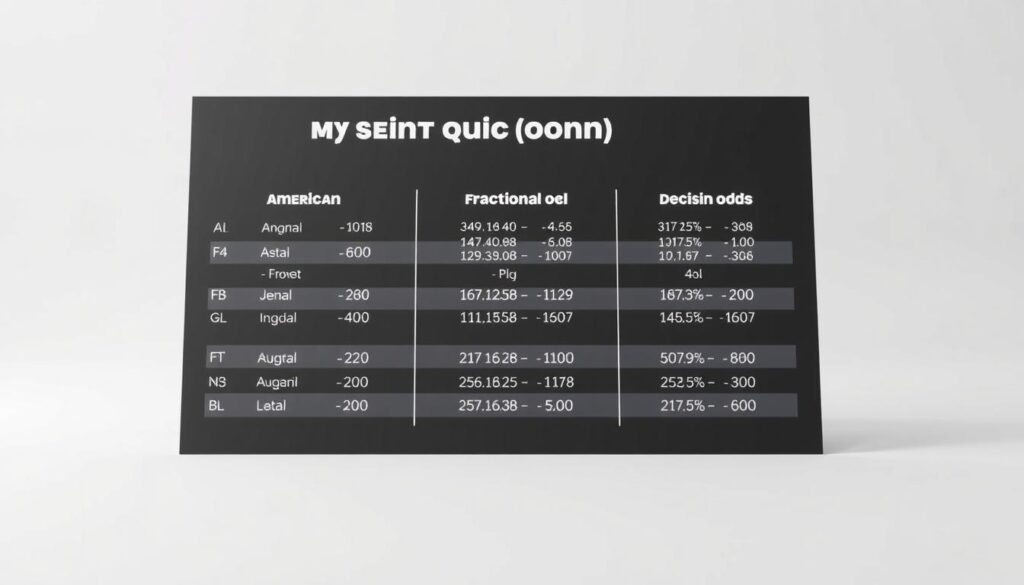
Moneyline Decryption Kit
American odds are unique and often misunderstood. +400 means you could win 4 times your bet. -150 means you need to risk $150 to win $100.
When +400 Means “Hold My Beer”
Fractional odds are easier to understand. For example, 9/1 odds mean there’s a 10% chance of winning. This makes longshot bets seem less risky.
Parlay Algebra (Without Tears)
Multiplying odds can be tricky. It’s like putting together IKEA furniture. One mistake can ruin your chances of winning.
- 3-team parlay at -110 each? 6.96:1 payout
- Actual probability? 12.5% (needs all three correct)
Why 3-Legged Dogs Bite Back
Sportsbooks make a lot of money from parlays. A 25/1 ticket is not as good as it sounds. The odds can be very high.
Pro tip: Always convert odds to percentages before betting. If a bet has a 40% chance but you think it’s 60%, that’s a good deal. But if it’s not, you’re just helping the sportsbook.
Payout Examples
Let’s clear up some casino confusion. Imagine your grandma playing nickel slots versus someone betting on a +1000 underdog. Slot machines offer a 96% RTP, meaning Grandma loses $4 for every $100 spent quietly. On the other hand, betting on a +1000 longshot is like yelling “YOLO” in a hurricane – it’s risky but can be rewarding.
Consider the Bucks’ 7/1 championship odds last season. A $100 bet could win $700, enough for great seats if they’d won. But slots can take that $100 away faster than a TikTok video.
Parlay Betting Explained: March Madness Edition
Imagine three Cinderella teams in a bracket-busting parlay. Here’s what happened in 2023:
- #15 Seed Upset (+800): $10 → $90
- Mid-Major Dark Horse (+350): Roll $90 → $405
- Buzzer-Beater Underdog (+120): Final payout → $891
This parlay had an 8,810% return, impressive enough to make WallStreetBets jealous. But each leg had a ≤20% win chance. The math shows a 0.8% success chance, like betting against three Thanos snaps.
| Strategy | Investment | Expected Value | WSB Approval Rating |
|---|---|---|---|
| Slots (96% RTP) | $100 | -$4 | 🚫 (Boomer Energy) |
| Single +1000 Bet | $100 | +$1,000 | 🟡 (Mild Dab) |
| 3-Team Parlay | $10 | +$891 | 🚀 (Diamond Hands) |
So, which is better? The slow loss of slots, the thrill of a parlay, or the steady wins of single-game bets? The answer is simple: the house always wins, unless you’re the one running it.
How Bookmakers Set Odds
Bookmakers are like a mix of data scientists and carnival barkers. They use cold algorithms and “tribal wisdom” to set odds. This wisdom comes from experienced pros who’ve seen it all.
William Hill’s #YourOdds program shows this mix. It lets people ask for special bets while algorithms figure out the risks.
Three main things shape the odds you see:
- Math models sharper than a Vegas card counter: Algorithms look at 137 data points per game, from weather to a quarterback’s personal life.
- Market whispers: Odds makers watch betting patterns closely, like Wall Street quants.
- The silent partner: The house edge is hidden in every price, like a casino’s secret fee.
Let’s look at the vig – the bookie’s safety net – using casino war as an example. This game has a 2.65% house edge. Bookmakers use a similar margin in sports betting. They don’t need to guess everything right – just balance the bets better than a circus tightrope walker.
Modern odds compilers are like Nate Silver, but from Las Vegas. They use:
- Machine learning models trained on decades of data.
- Live dashboards to track bets across markets.
- Intuition gained from big sports events.
The odds change like desert sands – reacting to injuries, weather, and public mood fast. Smart bettors watch these changes closely, looking for any odd discrepancies.
Understanding Sportsbooks and Online Odds Displays
Sportsbook interfaces are like the control panels of gambling. Reading odds can be a superpower or a big problem. Think of it like trading crypto on Robinhood versus Bloomberg Terminal. Replace “stocks” with “point spreads” and you get DraftKings’ busy look versus FanDuel’s calm design.
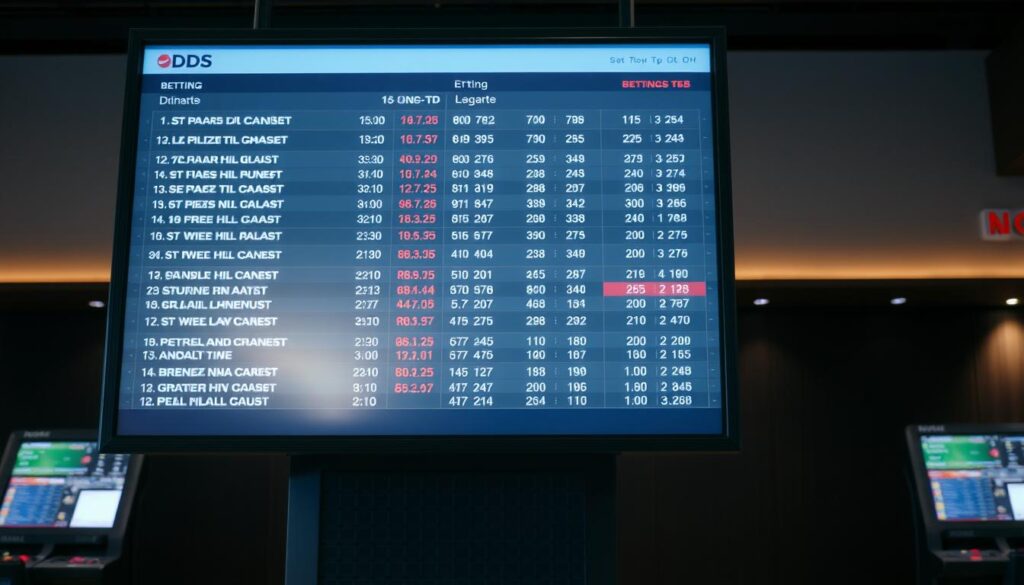
Let’s look at these digital places. DraftKings is like a neon Times Square billboard, always flashing “LIVE.” FanDuel is more like an Apple Store, with clean lines and soft colors. But, both hide their best sports betting odds in tricky spots.
Every smart bettor looks for three things:
- Odds boost traps: Those “+200%” banners are often bad deals
- Live betting labyrinths: Odds change fast, like TikTok trends
- Comparison mode: The best feature most apps hide
Pro tip: Bookmakers are like magicians. They want you to watch the lights, not the odds. That “special offer” on the Knicks game? It might have more fine print than a Tesla warranty. To spot these tricks, do:
- Compare odds on 3+ sportsbooks at once
- Time your bets before or after big line changes
- Ignore anything that blinks or promises free money
In the casino of sports betting odds displays, the house always wins. But now you have the blueprints.
Odds and Risk: Avoiding Common Pitfalls
Ever seen a crypto empire fall apart fast? The FTX collapse was more than just bad bets. It showed the dangers of overleveraging. Sports bettors face similar risks when they chase losses or bet on unlikely outcomes. Let’s look at the financial dangers with the same logic as Warren Buffett analyzing meme stocks.
Your gambling bankroll should be treated like a 401k, not Monopoly money. Here’s a comparison:
| Strategy | Smart Investor | Reckless Bettor |
|---|---|---|
| Allocation | 1-3% per play | 50% on “lock” picks |
| Risk Management | Stop-loss limits | Martingale doubling |
| Long Game | Compounded growth | Chasing breakeven |
Parlay addiction is like margin trading in sports betting – exciting until your account looks like the Wolf of Wall Street detox scene. I once saw a colleague lose $5k on a +1500 underdog parlay. He thought, “The math works if you factor in…” But it didn’t.
Here are three rules for gambling bankroll management to keep you safe:
- Never stake more than 2% on single events
- Track every bet like IRS auditors
- Weekly loss caps (treat them like credit limits)
If your betting history looks like a FICO score autopsy, stop. The National Problem Gambling Helpline (1-800-GAMBLER) is not just for emergencies. It’s like calling a financial advisor before your portfolio crashes. Remember, responsible gambling isn’t about willpower. It’s about creating systems that outsmart your inner Jordan Belfort.
FAQ: Odds Explained
“Do +600 odds mean I’ll get 600% returns?”
No, it doesn’t. +600 odds mean a $100 bet will win $600. That’s a 6:1 ratio. It’s not like Walter White from Breaking Bad became a billionaire.
Think of it as the Swiss Army knife of parlays—three doubles and one treble. You’re covering multiple outcomes like Jesse Pinkman covering his tracks. Here’s the breakdown:
- 4 total bets (3 doubles + 1 triple)
- Minimum two correct picks to get paid
- Risk spread like Nutella on toast
How do I convert odds formats?
Converting decimal to American odds is like switching from metric to imperial. Use this cheat sheet:
| Decimal | American | What It Means |
|---|---|---|
| 3.00 | +200 | Double your money |
| 1.50 | -200 | Risk $200 to win $100 |
| 2.50 | +150 | 150% profit on stake |
Teasers vs parlays: What’s the difference?
Parlays are like Walter White’s plans—high risk, high reward. Teasers are like Jesse’s “Yeah science!” moments. They adjust point spreads for better payouts. One’s methamphetamine, the other’s CBD gummies.
“Can I actually beat the house?”
Sure—if you can predict Black Swan events like actual swans winning Kentucky Derbies. Bookmakers build 10% margins into odds. Your best weapon? Understanding parlay betting math better than your bookie’s algorithm.
Conclusion: Confident Betting Starts Here
Odds are like Wall Street’s roulette wheel, but with a key difference. You’re not just gambling; you’re using numbers to make smart bets. Learning how betting odds work turns you into a skilled bettor. You’ll use math to make informed decisions, just like a Vegas pit boss.
Responsible gambling is all about math, not luck. It’s about making smart choices with your money. Unlike day traders, bettors use their money wisely, like Warren Buffett. The type of odds doesn’t matter; it’s all about understanding risk.
Sportsbooks make money from every bet. That 4-10% margin is their profit. But knowing how odds work lets you find good bets. Look at home-field advantages, injuries, and weather to make better choices.
Think of odds literacy as protecting your money. Make bets with a clear mind, not emotions. Now, go bet with confidence. Remember, you might not have the best odds, but you have the knowledge.
Leave a Reply