
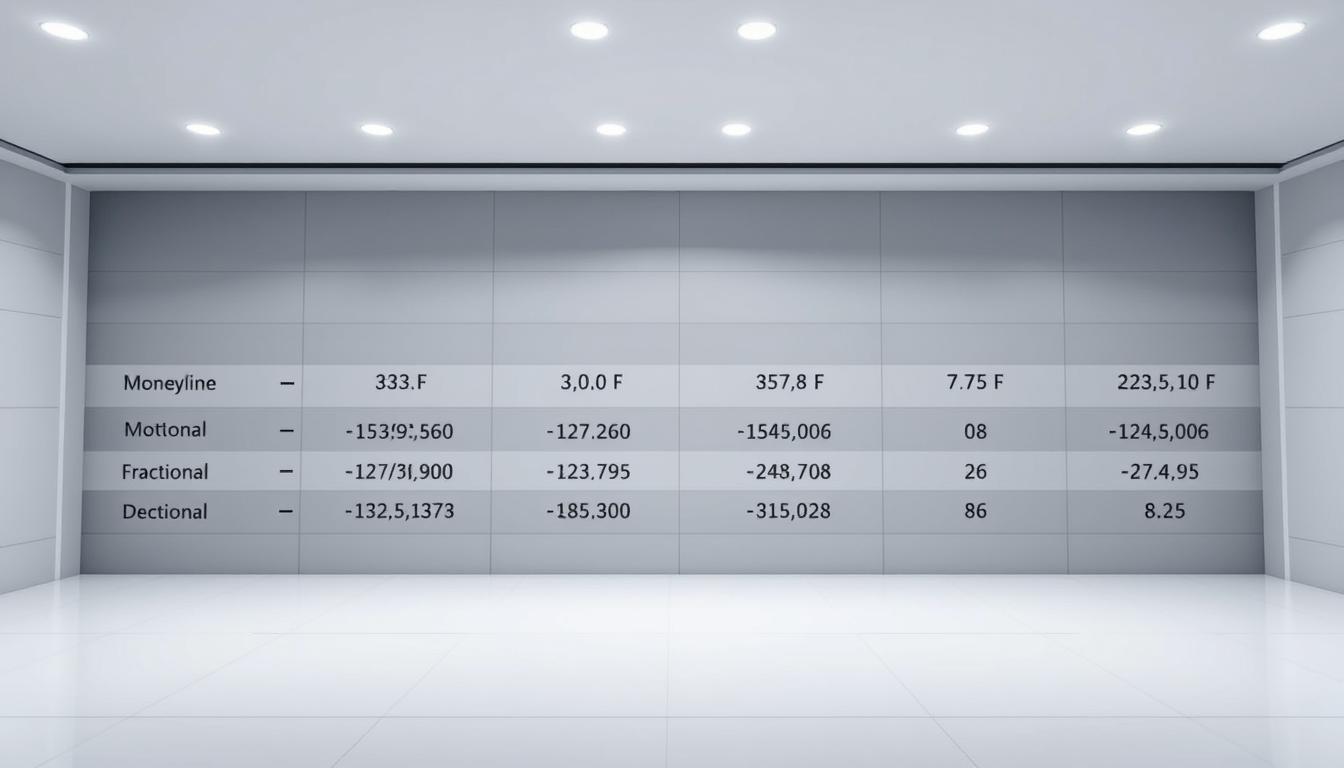
If those numbers look like ancient symbols to you, you’re taking a big risk with your money. It’s like playing a game of chance without knowing the rules.
My first time seeing these numbers was overwhelming. They seemed like a secret code. But the truth is, knowing them can make you a better player.
It’s like learning a new language. The plus signs, minuses, and decimals are all about chances. They show us how likely something is to happen.
With the law changing in 2018, it’s more important than ever to understand odds. It’s not just about betting. It’s about knowing the odds and making smart choices.
Moneyline, Decimal, and Fractional Odds
Odds formats are like different languages. They all say the same thing but in their own way. Each has its own style and math.
Learning about these formats is more than just converting numbers. It’s about understanding the history and culture behind them. Let’s explore each one.
How U.S./Moneyline Odds Work
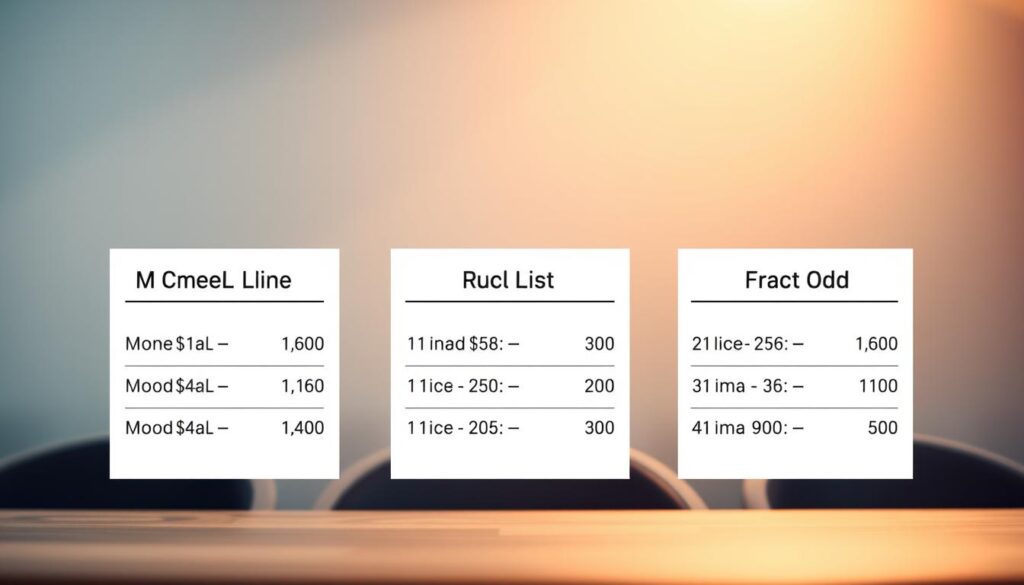
Moneyline odds are simple and direct. They use plus and minus signs like stock prices or polls.
Negative numbers show favorites. They tell you how much to risk to win $100. For example, -150 means you risk $150 to win $100.
Positive numbers show underdogs. They show your profit on a $100 bet. A +250 line means you win $250 profit on a $100 bet.
Moneyline makes betting easy. Betting on the Patriots at -200 means risking $200 to win $100. Betting on the Jets at +300 means risking $100 to win $300.
How British/Fractional Odds Work
Fractional odds are elegant and traditional. They use a ratio to show profit, like 5/1.
A 5/1 line means you win $5 for every $1 bet, plus your original bet back. So, a $10 bet at 5/1 returns $60.
Fractional odds are great for any bet size. They’re popular in horse racing and UK football, adding charm to digital betting.
How European/Decimal Odds Work
Decimal odds are efficient and easy. They show your total return per unit staked. This makes them simple to understand.
A 2.50 decimal odd means you get $2.50 total for every $1 bet. It’s easy to calculate – just multiply your stake by the number.
Decimal odds are the standard for modern betting. A 1.80 on a soccer match means a $100 bet returns $180.
Want to convert between these formats easily? Our odds converter tool does the math for you. This way, you can find the best value in sports lines.
Here’s how the three formats compare for the same probability:
| Probability | Moneyline | Fractional | Decimal |
|---|---|---|---|
| 80% chance | -400 | 1/4 | 1.25 |
| 50% chance | +100 | 1/1 | 2.00 |
| 20% chance | +400 | 4/1 | 5.00 |
Each format tells the same story but in its own way. The math is the same, but the presentation shows their cultural roots.
Comparing Odds Across Sportsbooks
Think you’re getting the best deal on your bets? Think again. The same game can have wildly different prices depending on where you shop. It’s not about avocado prices at Whole Foods versus Trader Joe’s.
Line shopping is like checking airline prices on Kayak before booking. A small difference in moneyline odds can add up quickly. It’s like earning interest in a high-yield savings account.
Let’s look at the math behind it. Converting between odds formats is not rocket science. But it does need some mental effort:
- American to decimal: Positive odds? Divide by 100 and add 1. Negative? Divide 100 by the odds and add 1
- Fractional to percentage: Denominator divided by (denominator + numerator) times 100
- Implied probability: The real magic behind understanding value
Why does this matter? Finding Toronto Raptors at -125 when others have -130 might not excite you. But that 5-point difference is huge. It’s like choosing between economy and business class. Both get you there, but one is much better.
The big players – DraftKings, FanDuel, BetMGM, Caesars – each price differently. It’s like watching four Michelin-starred chefs make the same dish. The result? Small but important differences in flavor… and payout.
Smart bettors don’t just check one sportsbook. They check them all. That’s why platforms like Oddstrader exist. They give you the financial smarts of a Wall Street quant without needing an Ivy League degree.
Remember: The house always has an edge. But by shopping lines, you’re negotiating that edge down. It’s like collective bargaining for sports bettors.
Those extra 0.5% or 1% gains add up fast. Over 100 bets, they could mean the difference between breaking even and making a profit.
So next time you’re placing a moneyline bet, ask yourself: Are you getting the business class experience, or settling for economy with middle seat energy?
Live Odds and What Affects Them
Welcome to the world of sports betting, where point spreads change quickly. Live betting turns fans into traders, reacting to every play. It’s like Wall Street reacting to news from the Federal Reserve.
The first spread you see is just the beginning. It’s like the opening bell in a high-stakes game. Every play on the field changes the numbers instantly.
What changes these numbers? It’s like a mix of sports analytics, weather forecasts, and injury reports. A quarterback’s injury is as big as inflation news. Weather changes, like in Buffalo in December, can change totals fast. Momentum swings are like Fed rate changes in betting.
Here’s how big game events affect live spread changes:
| Game Event | Spread Impact | Typical Adjustment | Window of Opportunity |
|---|---|---|---|
| Early Score by Underdog | Favorite spread increases | +1 to +3 points | 2-5 minutes post-score |
| Key Player Injury | Spread shifts dramatically | +4 to +7 points | Immediate to next possession |
| Weather Deterioration | Total points decrease | -3 to -7 points | Ongoing throughout game |
| Momentum Shift | Spread correction | ±2 to ±4 points | Next 2-3 possessions |
Smart bettors watch for these moments like day traders watch earnings reports. An early touchdown by the underdog is a buying chance. A star player’s injury means reassessing everything.
The art is in strategies like hedging. It’s like an insurance policy in sports betting. You take a bet, then adjust when things change.
Middling is like having your cake and eating it too. You bet on both sides of a spread. If the margin is between your numbers, you win both bets.
Remember, live odds are the market’s collective wisdom. They change with every play. Your job is to spot when the crowd overreacts.
The beauty of live spread betting? It turns games into dynamic chess matches. You’re not just predicting outcomes. You’re reacting to them in real-time, with real money and adrenaline.
Tools for Fast Comparison
Remember when finding the best Sports Betting Odds meant calling three different bookies and hoping one wasn’t lying? Those days are over. Today, smart bettors use digital tools that make Tony Stark’s tech look old.
Odds comparison apps are your new best friend. They scan dozens of sportsbooks at once, finding price differences fast. Why take -110 when -105 is available?
Parlay calculators do the math that would make accountants cry. They show your return for a four-team parlay at +600. It’s like having a math PhD in your pocket without the student loans.
Live odds feeds turn your phone into a sports trading terminal. Prices update in real-time as games happen. You can catch momentum shifts before others even notice.
Cash-out features give you ultimate power. You’re not stuck by bad decisions. Win big early? Lock in profits. Game going bad? Cut losses and live to bet another day.
These tools make insider knowledge available to everyone. The edge isn’t in secret info anymore. It’s in who uses these tools best.
Your smartphone is now the most powerful Sports Betting Odds tool. The question is, why haven’t you used it yet?
Conclusion: Smarter Bets, Better Wins
Exploring sports betting odds shows a key truth. Knowing the odds won’t always win you games, but it’s better than guessing. It’s like the difference between playing roulette and poker. Both have luck, but only poker rewards skill.
The real victory isn’t just about money. It’s the joy of figuring out the odds. By analyzing them, you become a game strategist. You see games in a new light, understanding the math behind the excitement.
Always bet wisely, not recklessly. Set limits, track your bets, and know when to stop. For those diving into understanding moneyline odds, keep the National Problem Gambling Helpline (1-800-GAMBLER) handy. Even chess experts need limits.
This isn’t about making quick money. It’s about using smart strategies in sports. It’s like solving a complex equation with real stakes. That’s a victory worth betting on.
Leave a Reply